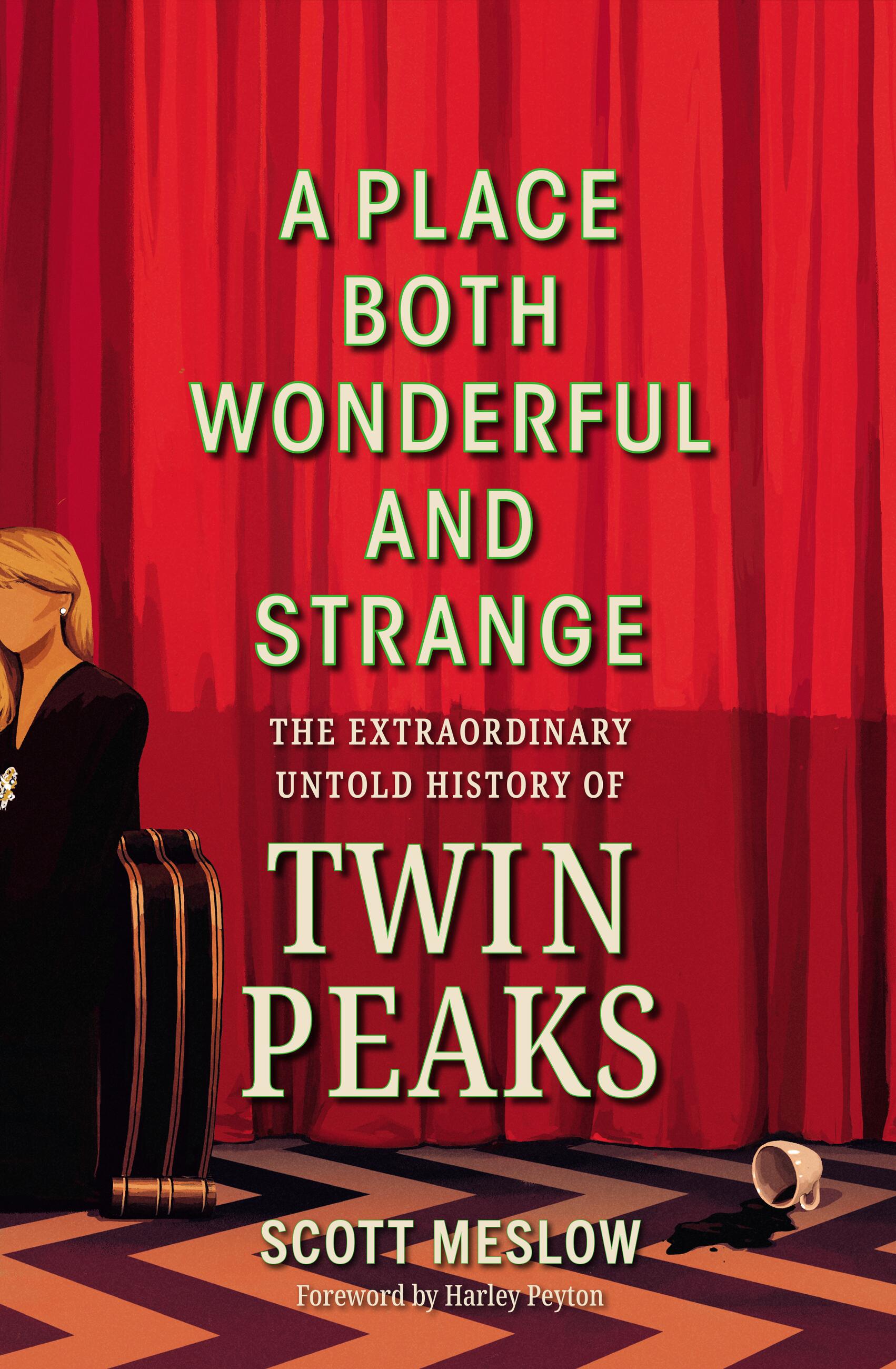

Gersande La Flèche wants to read How a Game Lives by Jacob Geller
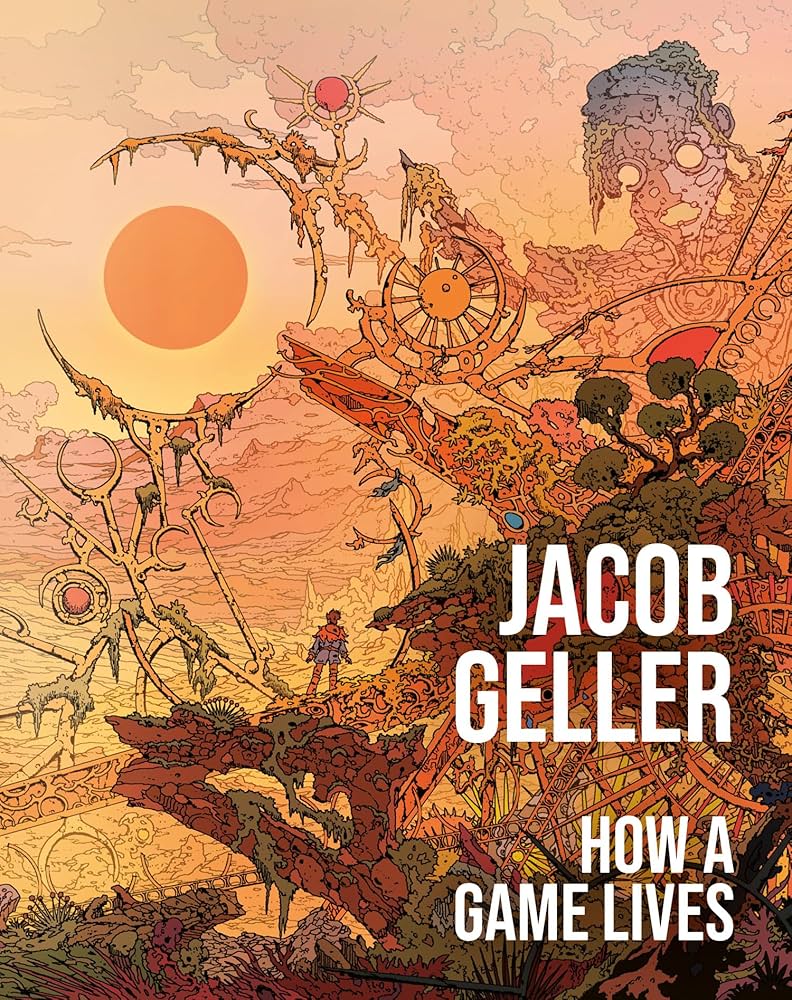
How a Game Lives by Jacob Geller
Over his illustrious career, Jacob Geller has written and produced a sprawling collection of video essays. Deftly interweaving video game …

Why can't I read all these books!? 🍋🟩
🍵 Lots of nonfiction, literary fiction, poetry, classical literature, speculative fiction, magical realism, etc.
📖 Beaucoup de non-fiction et de fiction, de poésie, des classiques, du spéculatif, du réalisme magique, etc.
💬 they/them ; iel/lo 💻 blog: blog.gersande.com 💌 Find me on fedi the.bisexuals.town/@gersande or bsky
This link opens in a pop-up window



5% complete! Gersande La Flèche has read 5 of 100 books.
Over his illustrious career, Jacob Geller has written and produced a sprawling collection of video essays. Deftly interweaving video game …
Gersande La Flèche
boosted
Over his illustrious career, Jacob Geller has written and produced a sprawling collection of video …
1) "It was YouTube's algorithm that catapulted me to prominence with an essay on a hidden secret in Shadow of the Colossus and that algorithm (for now) continues to favor even my most esoteric topics. Is it a deeply alienating experience to surrender success to an unknowable piece of code that understands neither quality nor morality? Yep!!!!!! But that code also helped most of you find this book, and for that, I'm appreciative."
2) "While writing this book, the entirety of Game Informer's website was unceremoniously shut down; decades of reviews, interviews, and more (like everything I wrote as an intern), flushed into the same non-existence as my original blogs. Every disappeared article, every piece of lost media, hurts our understanding of its subject. Simply playing a game (or watching a movie, or reading a poem) cannot contextualize its impact. Conversation defines a piece of art's cultural legacy. …
1) "It was YouTube's algorithm that catapulted me to prominence with an essay on a hidden secret in Shadow of the Colossus and that algorithm (for now) continues to favor even my most esoteric topics. Is it a deeply alienating experience to surrender success to an unknowable piece of code that understands neither quality nor morality? Yep!!!!!! But that code also helped most of you find this book, and for that, I'm appreciative."
2) "While writing this book, the entirety of Game Informer's website was unceremoniously shut down; decades of reviews, interviews, and more (like everything I wrote as an intern), flushed into the same non-existence as my original blogs. Every disappeared article, every piece of lost media, hurts our understanding of its subject. Simply playing a game (or watching a movie, or reading a poem) cannot contextualize its impact. Conversation defines a piece of art's cultural legacy. This is how a game dies: when all the context of its life is stripped away."
3) "This tendency for conceptual art to provoke thoughts even after the viewer rejects it is what makes it defensible as art. It is also what makes it threatening to fascists."
4) "Part of being a kid is wondering why a grown-up is crying while reading a book about a tree out loud, and a part of being an adult is being the crying reader."
5) "I will not attribute my current-day politics to Animorphs. I do not think they're the reason I don't like war. But I read these books so much as a kid. I read them far before I read about World War II, or Vietnam, or Iraq. And Applegate knew that, one day, I and all the other kids reading her books would read books, and watch movies, and consume propaganda, about war. She knew that the world we lived in wasn't frictionless, and to pretend it was would be doing us a disservice. The darkness wasn't just Animorphs' hook — it was central to the series ethos."
6) "The problem, ultimately, is what that darkness leaves you with. I could write 90% of an essay on how any of these games are the darkest in their series, but then you get to the end, and... what? 'Isn't it crazy how messed up this is?' It's an empty reading, substanceless. Ironically, it's juvenile. Being 'messed up' is not a theme. Darkness is not a narrative. Violence on its own is not mature. Every description I've given thus far is missing the crucial piece, the so what, the why should I care? [...] Every Zelda is the darkest Zelda because every Zelda is about growing up. Every Zelda is about gathering the strength and grace you need to face a world that is fundamentally harsh, alienating, and unjust."
7) "It seems like every few months, we have the same conversation about game reviews: should they factor hour count into their assessment? Is a 100-hour game inherently better for the money than a two-hour one because you get this much entertainment per dollar? I, as expected, don't like this idea. I don't judge my favorite TV shows on number of episodes, my favorite songs on their runtime. While I understand the desire to stretch one's money as far as possible, this equation just seems like another way to throw the dial all the way toward games-as-product. I have an alternative proposition, although even more impossible to implement. What is the hour count that a game lives in your memory? How often do you think of it, reference it, dream about it?"
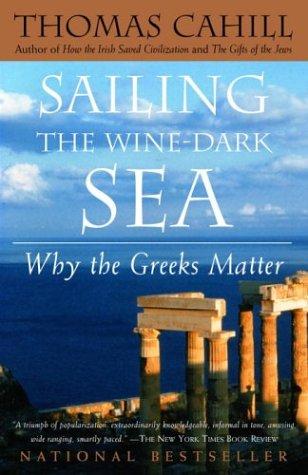
In the fourth volume of the acclaimed Hinges of History series, Thomas Cahill brings his characteristic wit and style to …
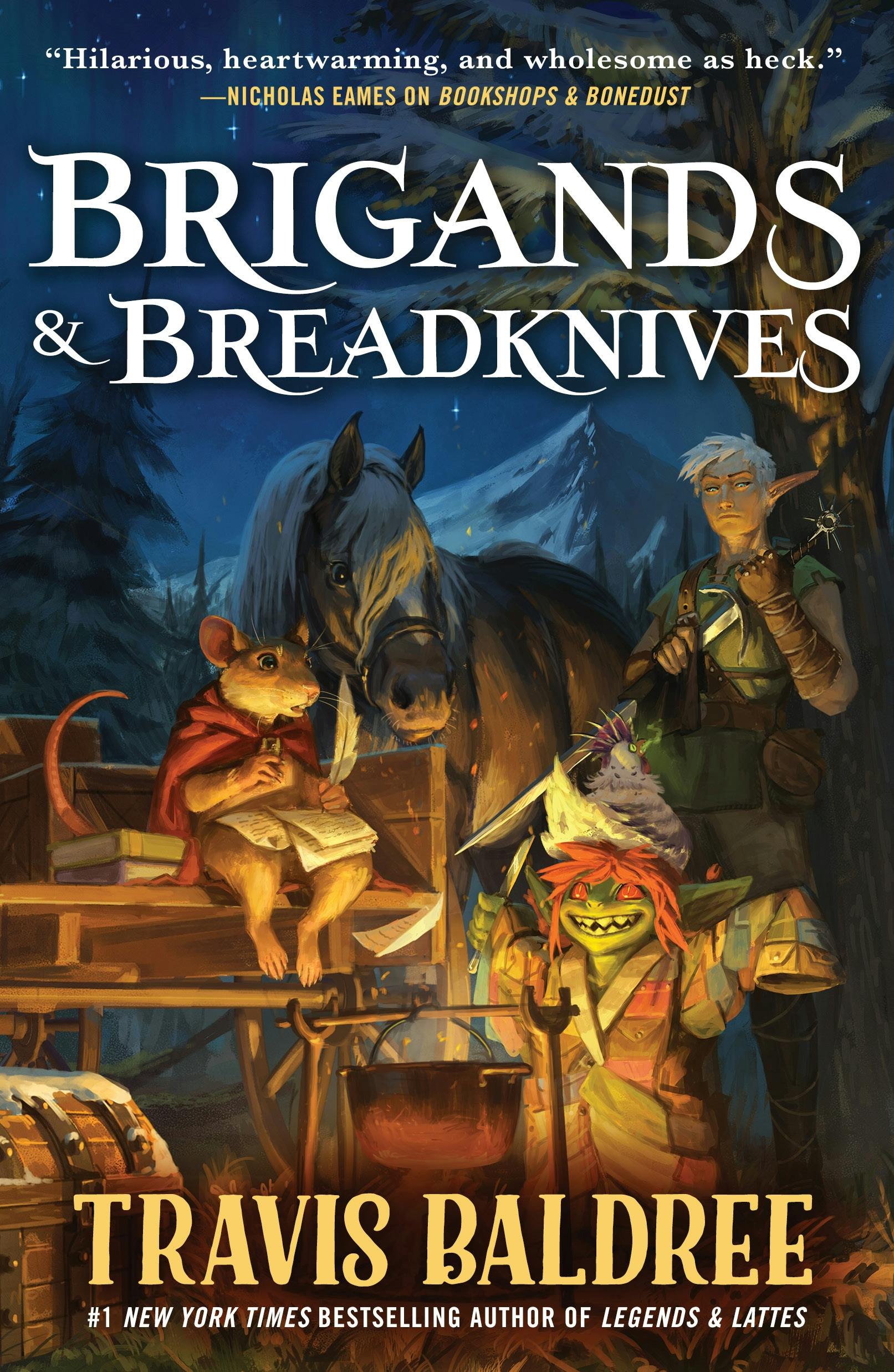
Return to the cozy fantasy world of the #1 New York Times bestselling Legends & Lattes series with a new …
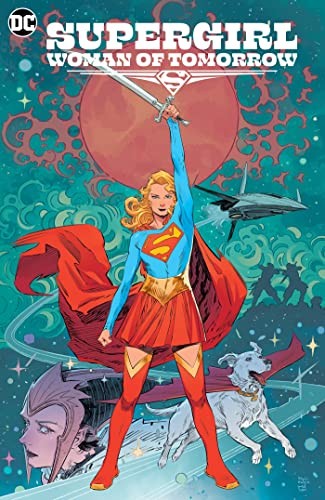
Supergirl returns to DC’s comics this summer to headline her first new series in years: Supergirl: Woman of Tomorrow, a …
Supergirl returns to DC’s comics this summer to headline her first new series in years: …
Artwork had me dreaming of a different decade, reminding me of the best that the (old old old) Valérian, Thorgal, and Métal Hurlant could deliver. And the narrative frame was immediately compelling.
Supergirl remains a favourite for exactly the themes described in this book: an exploration of how you keep living in unimaginable pain and grief, when your world has ended and keeps ending every single day.
Gersande La Flèche
boosted
In Evil Hour (Spanish: La mala hora) is a novel by Colombian writer Gabriel García …
Un beau bouquin. On sent pointer le "réalisme magique", sans magie mais avec beaucoup de réalisme. Une riche plongée dans un village colombien reculé, au début des années 60 ou fin des années 50 (le livre semble très ancré dans cette époque historique et politique très particulière de la Colombie, la sortie de la Violence et ses répliques). C'est aussi une satire très caustique de la société colombienne rurale à cette époque.
Un livre pas forcément très chatoyant, moins spectaculaire que d'autres œuvres du même, mais vraiment une bonne lecture.
Un beau bouquin. On sent pointer le "réalisme magique", sans magie mais avec beaucoup de réalisme. Une riche plongée dans un village colombien reculé, au début des années 60 ou fin des années 50 (le livre semble très ancré dans cette époque historique et politique très particulière de la Colombie, la sortie de la Violence et ses répliques). C'est aussi une satire très caustique de la société colombienne rurale à cette époque.
Un livre pas forcément très chatoyant, moins spectaculaire que d'autres œuvres du même, mais vraiment une bonne lecture.
@s_mailler@bw.heraut.eu un de mes écrivains préférés
ça fait des années que je n'ai pas relu ce livre, je me demande si j'ai encore une copie papier à qq part...
@s_mailler@bw.heraut.eu un de mes écrivains préférés
ça fait des années que je n'ai pas relu ce livre, je me demande si j'ai encore une copie papier à qq part...
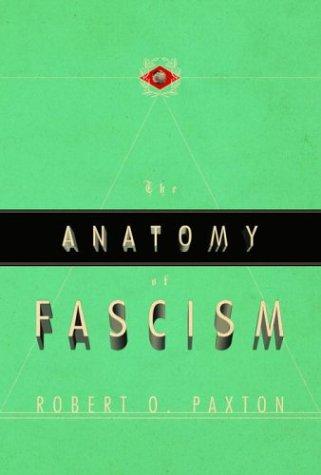
An analysis of fascism seeks to clarify its ideological foundations, the leaders and historical situations …
For many years I taught a university course on fascism, sometimes as a graduate seminar, sometimes as an undergraduate seminar. The more I read about fascism and the more I discussed it with students, the more perplexed I grew. While an abundance of brilliant monographs dealt illuminatingly with particular aspects of Mussolini’s Italy, Hitler’s Germany, and their like, books about fascism as a generic phenomenon often seemed to me, in comparison with the monographs, abstract, stereotyped, and bloodless.
— The Anatomy of Fascism by Robert O. Paxton (Page xvi)
Reading up on fascism from a historical/dialectical/materialistic perspective instead of an idealism (ideology?) perspective. Starting with Paxton.
Gersande La Flèche
boosted
Delving behind Canada’s veneer of multiculturalism and tolerance, Policing Black Lives traces the violent realities of anti-blackness from the slave …
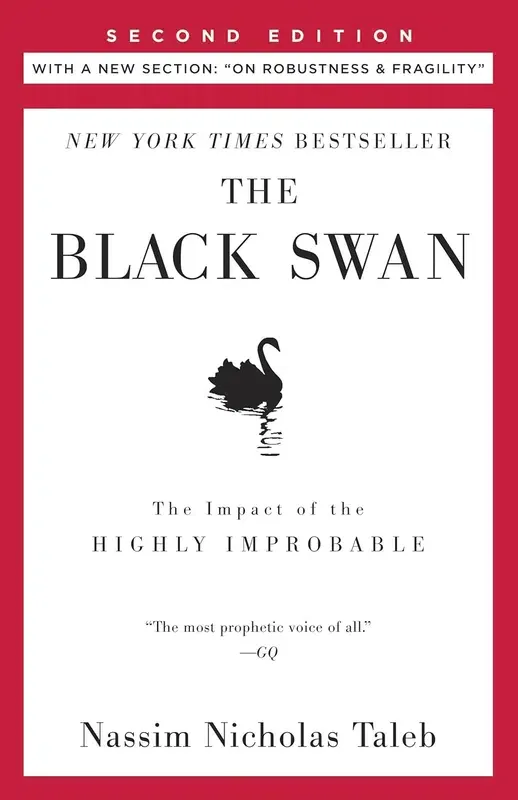
The most influential book of the past seventy-five years: a groundbreaking exploration of everything we …
Deuxième édition, première lecture, ça fait des années que j'avais envie de le lire, même en tenant compte certaines critiques.
Deuxième édition, première lecture, ça fait des années que j'avais envie de le lire, même en tenant compte certaines critiques.
@Tellington SO HIMBO
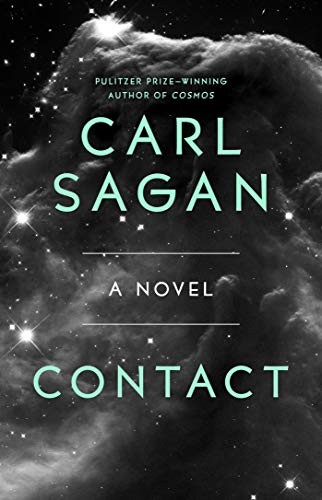
In December, 1999, a multinational team journeys out to the stars, to the most awesome …
I always forget how much Western Scientist Commentary On The Soviet Union there is. But also, the Soviet scientist, Vaygay Lunacharsky, is both an underdeveloped and underused character and it makes me sad.
Gersande La Flèche
boosted
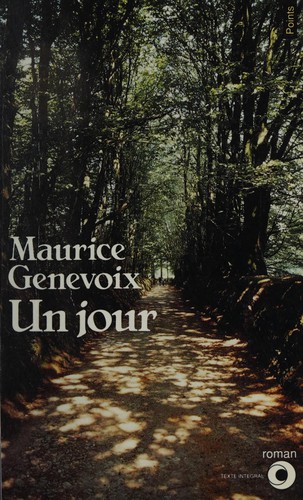
Un jour, une vie. Tel est le résumé du roman vivifiant et contagieux de Maurice …
Vous avez pu vous en rendre compte, les Vieux-Gués ne racolent pas : des allées qui coupent des taillis, des bouts de plaine tout de suite refermés, un étang modeste et secret que tels de mes amis qualifieraient de margouillat. Mais je les aime tels qu'ils sont. Les genêts, les ajoncs y fleurissent comme en Bretagne ; les hampes des digitales, comme en Sologne en cette saison, embrument du même rose les talus des forêts. Les petites draves du printemps, leurs menues collerettes rondes, leurs fleurs lilliputiennes, d'un blanc si pur… Je voudrais, si j'étais poète, chanter ce monde au ras de l'herbe où rosissent les fleurs de l'érodium, où les petits soucis des vignes éparpillent leurs gouttes orangées. Jaune, bleu, rouge, mauve, à la bonne heure ! Quelle formule d'ordinateur me toucherait comme ces mots-là ?
— Un jour by Maurice Genevoix
Un exemple de description superbe, et cette chute, qui me fait presque imaginer Genevoix prévoyant la naissance des grands modèles de langues. En fait, en 1964, Robert Escarpit avait inventé le littératron, un ordinateur capable de produire automatiquement des discours électoraux après avoir recueilli les préférences des électeurs, puis des romans.
« Cela commençait ainsi: La frêle jeune fille aux yeux pervenche qui descendit a la station de la Porte des Lilas était modestement mais proprement vêtue... La dernière phrase du livre était: Il lut dans son regard extasié la promesse d’un indicible bonheur. »
Gersande La Flèche
boosted

A new way of seeing the essential systems hidden inside our walls, under our streets, …
Finally, started listening to this while doing yoga this morning (I've been taking an audiobook break by listening to podcasts lately). I enjoy the combination of detailed engineering knowledge with a vulnerable memoir. The way that Chachra builds scenes of our real-world infrastructure having a purpose down to the smallest, easily disregarded, parts reminds me of the in-depth world building of acclaimed sci-fi novels like "Red Mars" yet describing instead the marvels of the real world. Those lengthy paragraphs that set the scene for our characters always strikes me as what sets the immersion into that world apart from any other book, centered far more on the action and drama between characters than anywhere else (should it even matter that they're in space?). What might be even more critical to the form of Chachra's writing is in bringing us out of pure fantasy through the recognition that all this is …
Finally, started listening to this while doing yoga this morning (I've been taking an audiobook break by listening to podcasts lately). I enjoy the combination of detailed engineering knowledge with a vulnerable memoir. The way that Chachra builds scenes of our real-world infrastructure having a purpose down to the smallest, easily disregarded, parts reminds me of the in-depth world building of acclaimed sci-fi novels like "Red Mars" yet describing instead the marvels of the real world. Those lengthy paragraphs that set the scene for our characters always strikes me as what sets the immersion into that world apart from any other book, centered far more on the action and drama between characters than anywhere else (should it even matter that they're in space?). What might be even more critical to the form of Chachra's writing is in bringing us out of pure fantasy through the recognition that all this is intrinsically grounded in racial capitalism.
I like the connection between how nature is often described as "the green stuff" as people with plant awareness disparity (I'm referencing the term from nph.onlinelibrary.wiley.com/doi/full/10.1002/ppp3.10153 ) may struggle to define the specifics of all that surrounds them until it all blurs into a green blob- to how infrastructure is often lost into its own blur of "grey stuff". As someone who's interested in the formation of identity as a result of the environment and grew up in an urban setting, I'm very interested in bringing attention to the diversity that exists around us at all times, subconsciously influencing what we assume to be the norm, but also empowering us when we are better able to define, enact, and tend to those relations.
Furthermore, I'm reminded of "Detritus, trophic dynamics and biodiversity" ( onlinelibrary.wiley.com/doi/abs/10.1111/j.1461-0248.2004.00606.x ) where it notes "This review incorporates the 'brown-world' of detritus into the largely 'green-world' of food web theory by integrating population, community and ecosystem ecology" (Hedin 1991; Pomeroy 1991 as cited by Moore et. al 2004). Being an amateur mycologist, it's important for me to bring attention to how the green could not function without the brown.