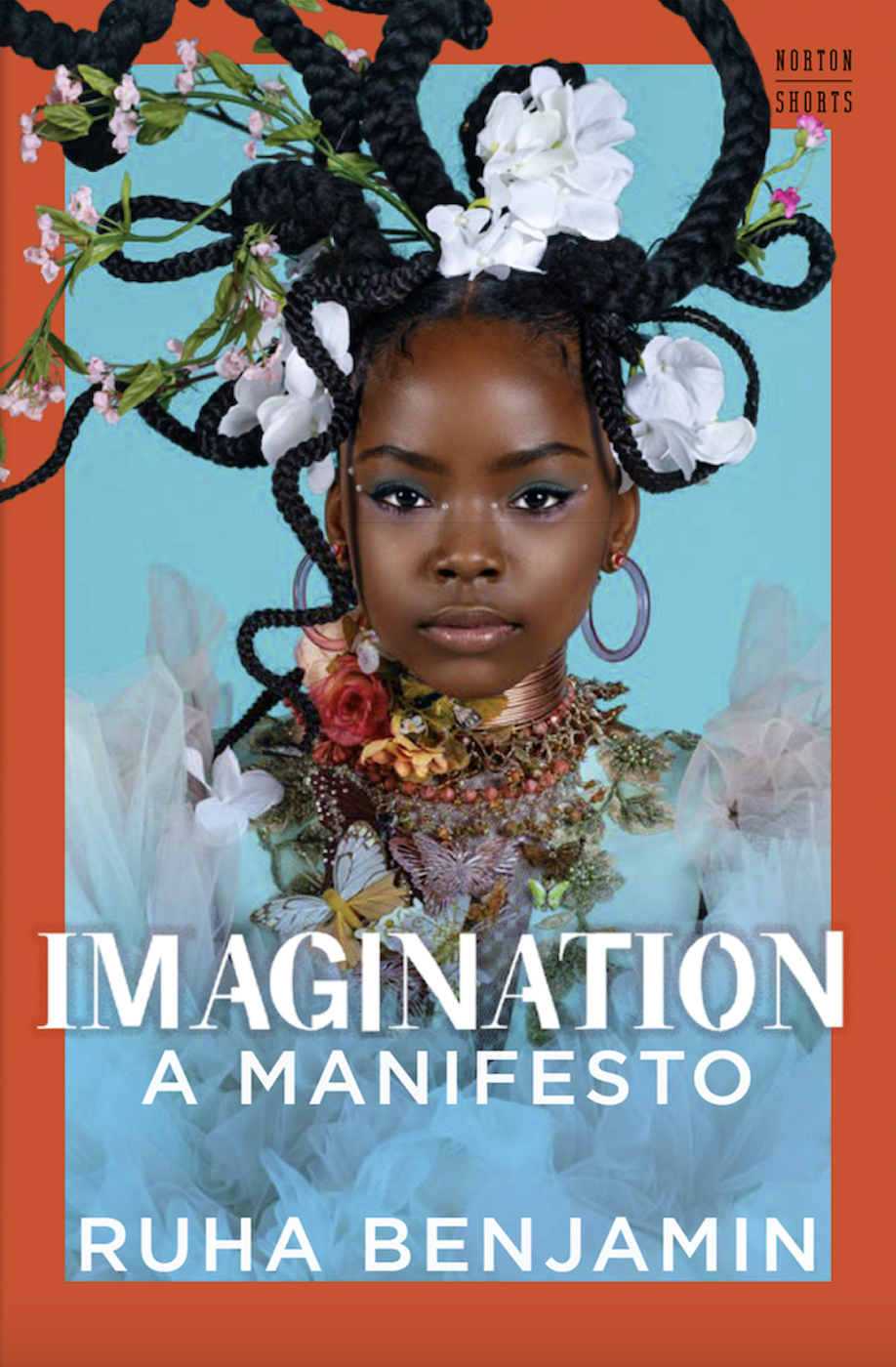
It took a couple of chapters for me to realise that Imagination: A Manifesto isn't an artist text for thinking with, or a beacon for a creative movement, but a teaching text. It would be a good resource for a high school student or first-year undergrad looking for direction in a world where we can feel so powerless and hopeless.
This is an easy read, written like a TED talk or a series of lectures by a really engaging professor, and I imagine the latter is probably close to how Ruha Benjamin developed it. Once in a while, there is an absolute clanger of a sentence that makes me cringe. "Why can we imagine growing heart cells from scratch in a lab, but not growing empathy for other human beings in our everyday lives[?]" or "...calamity and turmoil are all there is, until earth becomes one giant hashtag: #TheEnd".
(I wonder if these sentences land better if you've been taught by Benjamin and are familiar with her cadence. To be honest, I wish Benjamin's writing was a bit sillier in general, so that I could hear these moments spoken with a cheeky grin.)
This book is at its best when Benjamin describes various projects that aim to intervene in the ways systems of power are enacted, materialised, or represented. For example, Chapter Five, Imagining the Future, digs into art projects that materially interrogate the (present-day) situation of border policing, as well as wider issues of belonging under the eugenicist settler colonial state. It's fascinating, but it gets me wondering what happened when we stopped describing these as acts of making / research / direct action, and instead as acts of imagination? To return to those petri-dish heart cells: we can "imagine" it because it has been materially demonstrated, i.e. we're not really being asked to imagine anything in that situation. Isn't that the point of the artist-activist interventions that she describes: material demonstration overcomes the limits of imagination?
Imagination: A Manifesto is also about play, and draws on experimental games and the anthropology of play frequently. Benjamin's main point is that play, which is necessary for childhood development, is inequitably distributed, leading the least privileged young people to be deprived not only of play but of imagination. As a games person, I'm a bit troubled by Benjamin's use of "play" as an interchangeable concept with "imaginary". Again, part of the problem here is the lack of space available to delve into questions such as what play is, how different types of play engage the imagination, and the communication between a designer's imagination and a player's (who might be a child or an adult!) Instead of this bridging work we get, as is often the case with mentions of games in popular writing, assurances that "games are serious business" (another cringe moment). The same defense is not considered necessary when she writes about projects closer to the fine art world.
I don't disagree with this book, but its central argument might be too bland to be disagreeable: yes, we do need to empower people to imagine better worlds, and center the imaginaries of people whose voices have been silenced. Yet Benjamin isn't a bland thinker: Chapter Three is literally titled "Imagining Eugenics", putting in the strongest possible terms the consequences of centering the imaginations of the most privileged and constraining the imaginations of the oppressed.
Maybe what actually connects all the examples and ideas in this book isn't imagination, but practice. Each chapter could just as easily be re-titled, replacing the word "imagining" with the word "practising". Play is a way of practising life. The art projects she describes are ways of not just imagining, but practising different ways the world could be. The "imagination incubator" she describes in the final chapter is a space to practice the kind of worldbuilding we want to do in our lives, including researching who is already doing the kind of work that we think needs to happen (a vital step that I think is often missed in design labs). For a book that describes material interventions in the world's injustices and inequities, "imagination" seems to sell its subjects short.