


Ji FU wants to read M*A*S*H goes to Montreal by Richard Hooker (MASH, #13)
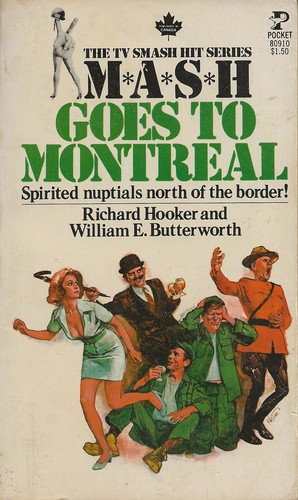
Hawkeye and Trapper John assume unlikely roles as "fathers of the bride"—and US-Canadian relations may …
Time to finish this series.

Trying to find a better way to track books I want to read than a random spreadsheet. I had used readinglog.info which was provided by my local public library until they shut down the program. Luckily, I regularly backed it up via their CSV export. I've used Library Thing for years, but adding books for "To Read" really screwed up a lot of the other features of the website, like recommendations, etc. I really love Free Software & the Fediverse particularly. My primary social media account is on Friendica @fu@libranet.de
This link opens in a pop-up window
70% complete! Ji FU has read 28 of 40 books.
Hawkeye and Trapper John assume unlikely roles as "fathers of the bride"—and US-Canadian relations may …
Time to finish this series.
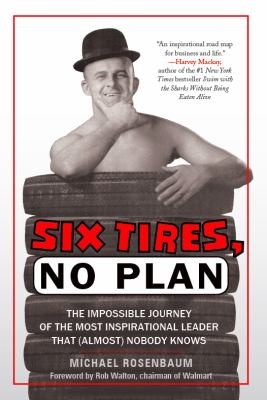
Most Unlikely to Succeed
No one who charted Bruce Halle’s early years would predict …
If I wasn't already a loyal Discount Tire customer I would be pretty upset that I just spent a week reading a 200 page ad for Discount Tire™. It was still mostly an ad, but I'm not very upset about it.
Bruce Halle probably isn't the absolute saint that his biographer claims, having not raised his voice since his 20s, and always putting his employees first.
I have first hand seen many of the company practices that are mentioned in the book, including free flat repair for everyone and free tires given to folks down on their luck.
At times I found the Stories of his practices of sending money to store employees who had sick family members and of the organizing team member hardship funds incredibly enduring, but then I'd think about it again and thought that if they had a union they wouldn't need hand-outs …
If I wasn't already a loyal Discount Tire customer I would be pretty upset that I just spent a week reading a 200 page ad for Discount Tire™. It was still mostly an ad, but I'm not very upset about it.
Bruce Halle probably isn't the absolute saint that his biographer claims, having not raised his voice since his 20s, and always putting his employees first.
I have first hand seen many of the company practices that are mentioned in the book, including free flat repair for everyone and free tires given to folks down on their luck.
At times I found the Stories of his practices of sending money to store employees who had sick family members and of the organizing team member hardship funds incredibly enduring, but then I'd think about it again and thought that if they had a union they wouldn't need hand-outs and could just get paid enough to cover stuff.
15-20 years ago when I thought "true capitalism" was the savior of us all, before capitalism ate me alive, I probably would have absolutely loved this book. Now its all-in-all something I didn't NOT enjoy, but I did see more of the "skill" of the author who frequently would say the same thing he did a chapter or two earlier "Mr. Halle continues to give $1,000 to every employee who gets married" for example.
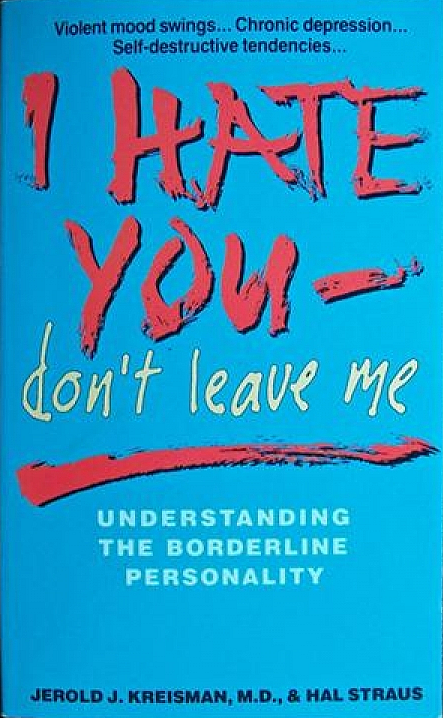
"AM I LOSING MY MIND?"
People with Borderline Personality Disorder experience such violent and …
Countertransference refers to the therapist’s own emotional reactions to the patient, which are based less on realistic considerations than on the therapist’s past experiences and needs...He may even enter into a sexual relationship with the patient “to teach intimacy.”
— I Hate You—Don't Leave Me by Jerold J. Kreisman (Page 154)
From the chapter Seeking Therapy.
Oh this certainly doesn't make me want to seek out therapy. While I suspect it is far more common with female patients with male therapists, the idea that such a thing ever occurs is messed up.
From the chapter Seeking Therapy.
Oh this certainly doesn't make me want to seek out therapy. While I suspect it is far more common with female patients with male therapists, the idea that such a thing ever occurs is messed up.
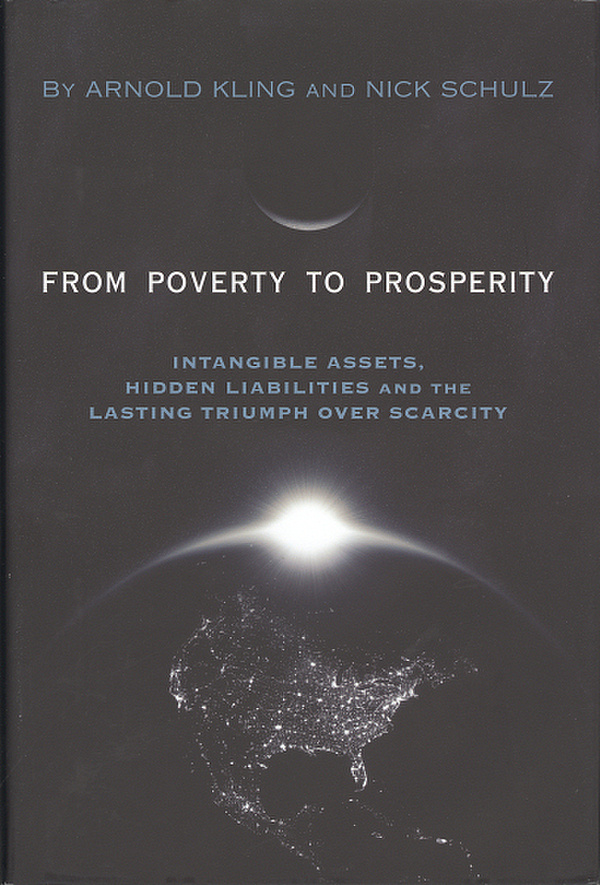
The discipline of economics is not what it used to be. Over the last few …
Put in interlibrary loan request.

It's just another day of high school for Zack Lightman. He's daydreaming through another boring …
I've only got like 2 CDs left and it really feels like it is not going anywhere. The ending is going to make or break it.
I've only got like 2 CDs left and it really feels like it is not going anywhere. The ending is going to make or break it.
"AM I LOSING MY MIND?"
People with Borderline Personality Disorder experience such violent and …
"SET"–Support Empathy Truth—is a three-part system of communication. During confrontations of destructive behaviour, important decision-making sessions, or other crises, interactions with the borderline should invoke all three of these elements. ... "Support," invokes a personal statement of concern. " I am sincerely worried about how you are feeling. . . ." "Empathy" attempt to acknowledge the borderline's chaotic feelings: "How awful you must be feeling" ... "Truth"...should be expressed in matter-of-fact, neutral fashion ("Here's what happened. . . . These are the consequences. . . . This is what I can do. . . . What are you going to do?")
— I Hate You—Don't Leave Me by Jerold J. Kreisman (Page 100 - 101)
@scarpentier lol
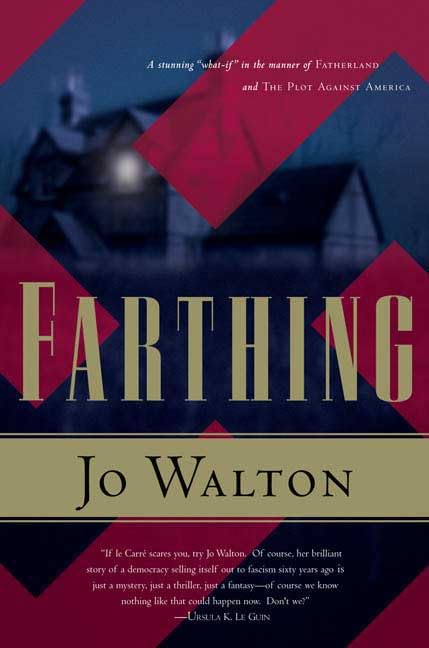
One summer weekend in 1949—but not our 1949—the well-connected "Farthing set", a group of upper-crust …
The library canceled my request for The Batman Murders so this was the next one in my library book queue.
When Scat comes up with the idea for the hottest new soda ever, he's sure he'll retire the next rich, …
When Scat comes up with the idea for the hottest new soda ever, he's sure …
I really really liked Syrup. I finished in only 3 days, but it wasn't as long as the 294 pages would lead you to believe what with huge margins and so many stylized paragraph headers. Maxx Barry's style of corporate humor started here, and backstabbing, and is it romance is it not, kept it moving. I never thought advertising could be anything but soul crushing. He even did a great job at portraying the nerds in editing, and the artists in film.
After reading Syrup I tried watching the movie but I turned it off not even half-way as it was so bad. Maybe having it not be Coke in the film made that much different? It just seemed weak sauce. So read this one and keep the DVD on the shelf.
I really really liked Syrup. I finished in only 3 days, but it wasn't as long as the 294 pages would lead you to believe what with huge margins and so many stylized paragraph headers. Maxx Barry's style of corporate humor started here, and backstabbing, and is it romance is it not, kept it moving. I never thought advertising could be anything but soul crushing. He even did a great job at portraying the nerds in editing, and the artists in film.
After reading Syrup I tried watching the movie but I turned it off not even half-way as it was so bad. Maybe having it not be Coke in the film made that much different? It just seemed weak sauce. So read this one and keep the DVD on the shelf.
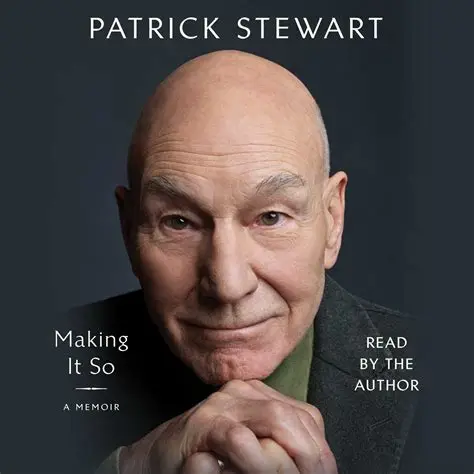
From his acclaimed stage triumphs to his legendary onscreen work in the Star Trek and …
On hold at the public library
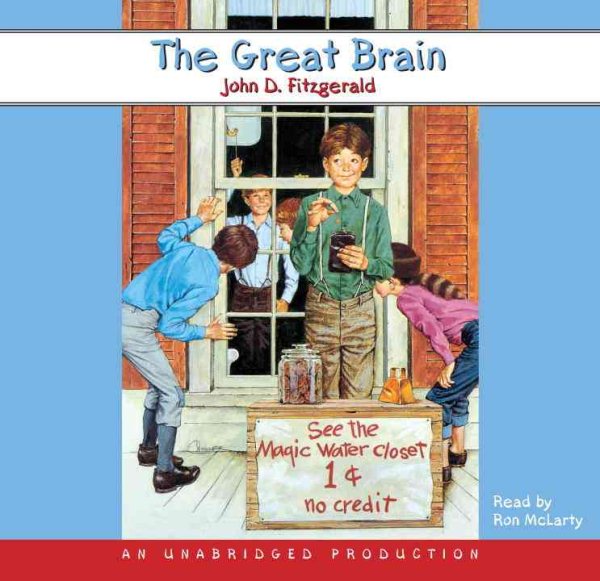
The Great Brain is Tom D. Fitzgerald, aged ten. The story is told by J.D., …
On hold at the public library
Most Unlikely to Succeed
No one who charted Bruce Halle’s early years would predict that the poor kid from …