
Ezra Tellington rated Clémence en colÚre: 5 stars

Clémence en colÚre by Mirion Malle
ClĂ©mence est en colĂšre. Une colĂšre si forte, si envahissante qu'elle l'empĂȘche de vivre. Sentant qu'un point de non retour âŠ
Petit rat de bibliothÚque qui a beaucoup de mal à lire. J'ai 32 ans, je suis non-binaire (iel+neutre/masc) et vous pouvez me retrouver sur @tellington@eldritch.cafe. J'aime un peu tous les genres sauf l'horreur et le policier. Je lis (et écris) en français et en anglais.
Lil' bookworm who has a hard time reading. I'm 32, non-binary (they/them) and you can find me at @tellington@eldritch.cafe. I like almost every genre except horror and mystery/crime novels. I read (and write) in French and English.
This link opens in a pop-up window

ClĂ©mence est en colĂšre. Une colĂšre si forte, si envahissante qu'elle l'empĂȘche de vivre. Sentant qu'un point de non retour âŠ
@leifur How are you liking it?
I love it so far, although I'm not very focused all the time (I'm listening to the audiobook)
We often think of dress as a costume: something that we put on over our internal self, which might reflect or obscure our true identity, but never reshape it. But while the distinction between âgender identityâ and âgender expressionâ is a useful teaching tool, helping to underscore the point that we canât tell anyoneâs gender just from looking at them â I use it myself every time I deliver trans awareness training â the reality of our experience is often more complex. My own dress both reflects and reshapes my gender: sometimes itâs the case that I put on jewellery and a bright, fitted cardigan because Iâm feeling less male and more non-binary on that particular morning, but sometimes the reverse is true. Both kinds of gendered experience are equally true for me: my gender isnât less authentic because a pair of dangly earrings can change how it feels.
— Before We Were Trans by Kit Heyam (Page 149)
I love this and relate a lot!
One key reason that these standards of realness arenât useful for looking outside our immediate cultural and historical context is because of the way they rely on asserting our deep, internal sense of gender. In order to prove our realness, we emphasise how strongly we feel ourselves to be male, female or non-binary on the inside. We draw a clear distinction between this internal gender identity and external factors like gender expression or gender roles. This internal/external distinction is essential to representing how we understand ourselves, and itâs essential to combating arguments like those of Stuart Waiton, which see trans people as motivated by a desire to conform to gender stereotypes in our external appearance and behaviour. But the problem is that this internal/external distinction doesnât really stand up to scrutiny. For one thing, not everyone (in the past or in the present) understands themselves as having a core, stable internal self that remains the same at all times: thereâs a lot of evidence to suggest that this understanding of selfhood is culturally specific and, in Western Europe and the USA, dates back only to the late eighteenth century.58 For another, people can have multiple motivations at once: a person in the past who was assigned female at birth and presented as male for a term in the army might well have been motivated both by a desire to overcome patriarchal assumptions about womenâs roles and by the affirmation they drew from being seen as male, and might well have struggled to separate the two (Iâd challenge anyone today to separate out the internal and external motivations for the way they present themselves). For another, external gender expression can impact or reshape the way we feel inside, whether temporarily or permanently. And for another, even if someoneâs motivations for disrupting gender are completely external, their history still demonstrates the viability of moving â whether for an hour or a lifetime â away from the gender we were assigned at birth, providing a powerfully liberating precedent for all of us.
— Before We Were Trans by Kit Heyam (Page 46)
This speaks to me a lot!

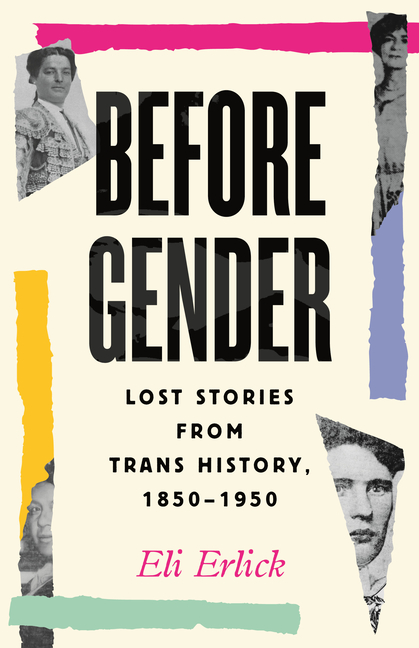
A groundbreaking global history of gender nonconformity Todayâs narratives about trans people tend to feature individuals with stable gender identities âŠ
@tendertools Bon c'est toujours pas le cas mais si je le lis je te dirai ! Tu l'as lu toi ?
I haven't read it all but I read part of it and the conclusion and it's so great!

Cory Doctorow: The Lost Cause (Paperback, 2023, Doherty Associates, LLC, Tom)
Itâs thirty years from now. Weâre making progress, mitigating climate change, slowly but surely. But what about all the angry âŠ