Paperback, 256 pages
English language
Published Jan. 9, 2025 by New York University Press.
Paperback, 256 pages
English language
Published Jan. 9, 2025 by New York University Press.
Hejtmanek (Friendship, Love, and Hip Hop), an anthropology professor at Brooklyn College, delivers an incisive critique of how the Crossfit fitness system perpetuates uniquely American Christian narratives. According to the author, such narratives are evident in Crossfit’s Spartan, franchised gyms (she calls them “settler outposts”) and militaristic workout styles, which reflect “frontier values” of independence, toughness, and adaptability; on the podiums where the—overwhelmingly white—Crossfit “finishers” receive medals (reinforcing the notion of a white, Christian, American superhero); and in the idea of challenging, painful workouts as a means to achieve both an ideal body and a kind of personal virtue, which the author links to the Christian idea of salvation through suffering. Hejtmanek highlights how the regimen’s reliance on such narratives reveals its highly conventional roots, belying its effective campaign to market itself as a rogue, “revolutionary” fitness system that counters “big business.” In the author’s hands, the Crossfit gym becomes …
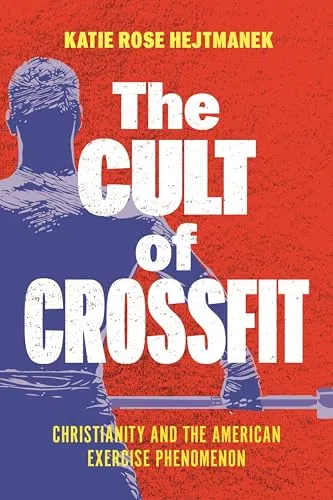
Hejtmanek (Friendship, Love, and Hip Hop), an anthropology professor at Brooklyn College, delivers an incisive critique of how the Crossfit fitness system perpetuates uniquely American Christian narratives. According to the author, such narratives are evident in Crossfit’s Spartan, franchised gyms (she calls them “settler outposts”) and militaristic workout styles, which reflect “frontier values” of independence, toughness, and adaptability; on the podiums where the—overwhelmingly white—Crossfit “finishers” receive medals (reinforcing the notion of a white, Christian, American superhero); and in the idea of challenging, painful workouts as a means to achieve both an ideal body and a kind of personal virtue, which the author links to the Christian idea of salvation through suffering. Hejtmanek highlights how the regimen’s reliance on such narratives reveals its highly conventional roots, belying its effective campaign to market itself as a rogue, “revolutionary” fitness system that counters “big business.” In the author’s hands, the Crossfit gym becomes a valuable microcosm to show how such narratives and their attendant misogyny, ableism, and discrimination remain veiled but deeply rooted in American culture under the guise of self-improvement.